Selecting Emitters for Drip Irrigation Systems
Emitters are crucial components of drip irrigation systems, designed to deliver water directly and in a controlled manner to plants. They play a significant role in reducing water consumption, enhancing irrigation efficiency, and boosting agricultural productivity. Selecting the right emitter for a specific plot and crop type is essential to achieving optimal results.
Types of Emitters:
Fixed-Flow Emitters: These emitters deliver a constant flow of water to plants. They are typically suitable for flat, uniform terrain.
Adjustable-Flow Emitters: These emitters allow for the regulation of water flow rates, making them better suited for areas with varied conditions.
Constant-Pressure Emitters: These emitters automatically adjust the flow rate in response to pressure changes and are commonly used in low-pressure water systems.
Emitters with Internal Filters: These are particularly suitable for areas with poor-quality water (which may contain suspended particles), as the internal filter prevents clogging.
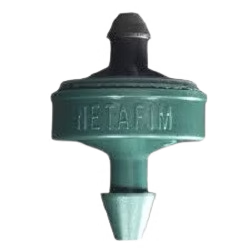
Criteria for Selecting Emitters
In this section, outline the various criteria for selecting emitters based on the specific needs of farmers:
Plant Type: Emitters should be selected according to the water requirements of different plants. For instance, plants requiring intermittent irrigation may need adjustable emitters.
Soil Characteristics: Light, sandy soils require low-flow emitters, whereas heavy, clay soils may necessitate emitters with a higher flow rate.
Water Pressure: Emitter selection must take the irrigation system’s pressure into account. If water pressure is low, it is advisable to use emitters designed to perform effectively under low-pressure conditions.
Pipeline Length: For large fields or remote areas requiring long pipe runs, emitters capable of maintaining a constant flow rate should be used.
Clog Resistance: Using clog-resistant emitters is essential to ensure the system operates properly.
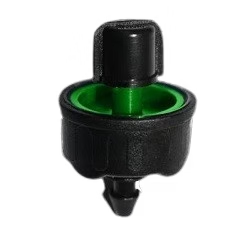
Advantages and Disadvantages of Emitters
In this section, we examine the advantages and disadvantages of choosing emitters:
Advantages:
Reduced water consumption
Increased irrigation efficiency
More precise control of water flow
Suitability for various terrains with specific characteristics
Disadvantages:
High initial cost
Requirement for regular maintenance and cleaning
Risk of emitter clogging
Installation and Maintenance Tips
Proper installation of emitters and appropriate maintenance of the drip irrigation system are crucial for ensuring optimal performance. Key practices include regularly cleaning filters, checking for emitter clogs, and monitoring water pressure.
Conclusion
Selecting the right emitter is a key factor in optimizing water usage and boosting agricultural productivity. The choice of emitter—depending on the terrain, crop type, and local conditions—can significantly impact the irrigation system’s performance. Netafim emitters are highly recommended by experts and are available at this store at a competitive price; please contact us for pricing information.