 Novin Absar
Design Services
Novin Absar water and modern irrigation engineering services: drip and sprinkler system design, hydraulic calculations, executive drawings, BOQ, and cost estimation. Review your project now.
Read more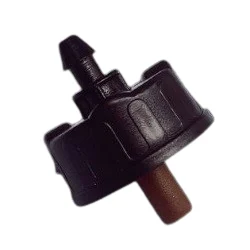
Drip irrigation is one of the pressurized irrigation methods. By supplying water gradually, the drip irrigation system helps prevent runoff, evaporation, and water loss under windy conditions.
At the beginning of the system, a gate valve is used as a flow controller. In this irrigation method, pipes equipped with drippers are placed among the plants, and you can cover them with soil so that they are not exposed to view.-1-1 Determining Dripper Discharge
The discharge and spacing of drippers are determined according to the type of plant, the type of soil, and the climatic conditions. For example, in areas with sandy soils and coarse grains, the spacing between drippers is smaller.
The drip irrigation system targets the roots of plants, thereby making irrigation more efficient and also reducing water and electricity consumption costs.
Another advantage of using this irrigation system is its applicability in hard-to-reach areas or on sloping land, and it also prevents damage to plants due to excessive waterlogging.

One of the irrigation methods is tape irrigation. The tape irrigation tape is made of polyethylene and, unlike polyethylene pipe, which is rigid, it is almost flat and very soft.
The tape has a soft and flexible material that fills up when water enters it. After irrigation ends, the tape becomes flat again. The wall thickness of the tape is very thin, and the spacing between drippers varies in different irrigation tapes; thicker tapes are usually used for subsurface irrigation of various plants.
Irrigation tapes are produced for different drip irrigation methods (surface and subsurface) and different plants, with a very wide variety in terms of thickness and spacing between drippers or slits.
However, the most widely used type is irrigation tape with a thickness of 200 and 150 microns, with discharge spacings of 10, 20, and 30 centimeters. Usually, Iranian irrigation tapes are of the slit type, while foreign irrigation tapes are of the plate (emitter) type.
The plate-type tape has drippers. However, the slit-type tape does not have drippers; instead, it has a zigzag-shaped (zipper-like) path along its side, which causes a drop in water pressure.
This allows the drops to exit through the slits and reach the base of the plant, which is commonly known as the side slit. Another type has an opening on top of the tape, which can be called the middle slit.

Does it consider it necessary to observe several points in tape drip irrigation? Basically, the tape drip irrigation system should not be used in farms with very hard and saline water.
If unavoidable, a complete water test must be carried out before designing and installing the tape so that anti-clogging measures can be provided for in the network design.
Head loss along the entire length of the tape irrigation line reduces the water flow. This condition is observed especially at the beginning of the lines and at the connection point of the tape to the 16 mm pipes. In water requirement calculations for irrigation, if the crop water requirement is underestimated, the plant roots penetrate into the tape outlet to reach water and cause clogging. Therefore, the environment around the roots must always have sufficient moisture and the plant's water requirement must be met.
If the tape irrigation line is installed underground, it is better to irrigate the field once to make the soil above the tape soft, in order to facilitate collecting the tape.
To control weeds, it is recommended to use herbicides, and weeding workers should not use sharp-pointed objects for weeding. Laying out irrigation tapes over short lengths increases the project cost due to the increased number of connections and the increased length of the supply pipes.
Laying out irrigation tapes over long lengths also reduces irrigation uniformity and ultimately reduces crop yield.
Another pressurized irrigation method is sprinkler irrigation, which itself is divided into several types. This system consists of wheeled aluminum pipes; this machine is one of the semi-mechanized irrigation machines and does not move during irrigation. After irrigating each part of the field, the lateral pipe is transferred to other parts of the field by a driving force or a gasoline engine.

2-2- Center Pivot Irrigation System
This pressurized irrigation system includes a large irrigation boom on which the sprinklers are mounted. This irrigation system is installed on wheels and, rotating around a central axis similar to the clockwise movement of a clock hand, irrigates the land in a circular pattern.
This machine has several openings mounted on A-shaped towers. Each tower has two large wheels. The radius of the irrigated circle equals the length of the lateral pipe.

In pressurized irrigation, the pumping station, main and secondary pipes, and booms remain fixed in place throughout the cultivation season, and as needed, sprinklers are connected by workers via risers to automatic valves at various points and irrigation is carried out. In this system, the main pipes are buried underground, and the lateral pipes can be either buried or above ground.

All components are transferred from one unit to another after irrigation, and the pump moves on the chassis. In this method, which is considered one of the classic methods, the pipes are made of aluminum, and their diameter is usually 3 inches. The suitable pipe length is determined according to the maximum permissible length, the maximum permissible velocity (2.3 meters per second), and the dimensions of the land; the pipe length is usually chosen as 6, 9, or 12, and AL is used for movable pipes and PE for fixed pipes.

In this method, all system components such as sprinklers, main and secondary pipes are fixed; this method is used for irrigating lawns.
Due to the high cost of this method compared to other methods, it is used for irrigation on a small scale such as parks, urban green spaces, and also football fields.

This video was produced by the Ministry of Agriculture-Jihad
This video was produced by the Ministry of Agriculture-Jihad
This video was produced by the Ministry of Agriculture-Jihad
This video was produced by the Ministry of Agriculture-Jihad
This video was produced by the Ministry of Agriculture-Jihad
Category: Sprinkler and Drip Irrigation Methods
Novin Absar water and modern irrigation engineering services: drip and sprinkler system design, hydraulic calculations, executive drawings, BOQ, and cost estimation. Review your project now.
Read more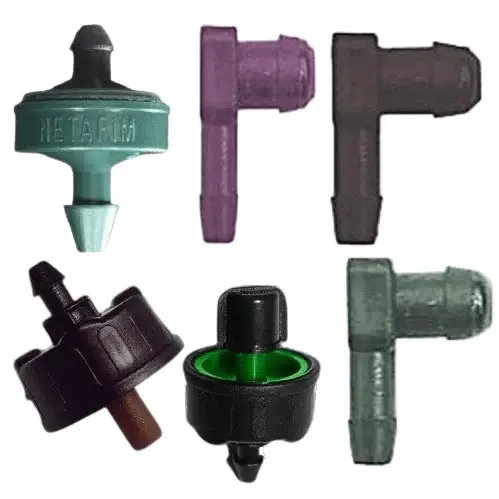
A complete guide to choosing the right dripper for drip irrigation based on plant type, soil, and water pressure; including an introduction to dripper types and installation and maintenance tips.
Read more
A complete guide to choosing water supply pipes and threaded agricultural pipes; features, applications, advantages, and maintenance tips for durable drip and sprinkler irrigation.
Read more