 Novin Absar
Design Services
Novin Absar water and modern irrigation engineering services: drip and sprinkler system design, hydraulic calculations, executive drawings, BOQ, and cost estimation. Review your project now.
Read more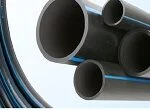
The most common use of threaded pipe is in agricultural irrigation. These pipes, with their high flexibility and light weight, can be used on various types of land and are employed to convey water in all kinds of irrigation systems.
Threaded pipe, or yarn-reinforced pipe, is one of the types of irrigation equipment and one of the most widely used flexible pipes; thanks to its durability and long service life, it is used in various drip irrigation and sprinkler irrigation systems.
Agricultural threaded pipes, known for their lightness and ease of handling, are designed so that they can be easily rolled up and stored when not in use. This article examines the features, applications, advantages, and maintenance tips of this type of pipe to extend its service life.
Threaded pipes are a type of Layflat pipe, except that yarn is used in their structure instead of polyester fibers. The yarn in the pipe's structure provides high flexibility and light weight. This feature allows for quick and easy installation, collection, and storage. Once rolled up, a foldable threaded pipe does not take up much space and does not require significant storage area.
The production process of black threaded pipe involves advanced techniques that enhance its overall performance. These pipes are produced using extrusion methods that ensure constant wall thickness and uniformity along the length of the pipe. The materials used in the structure of threaded pipes are resistant to chemical corrosion and to decay caused by sunlight, which increases the pipe's useful life and enhances its performance across a wide range of irrigation systems, water distribution and transmission systems, and more.
The high flexibility of the yarn fibers allows the high-strength foldable threaded pipe to be used on all types of terrain without any damage. It can also be reused in the next growing season if stored properly. The foldable pipe's ability to withstand very hot and very cold temperatures broadens its usability in different environments. As a result, this irrigation pipe not only conveys fluid efficiently but also performs reliably under various environmental conditions.
The most common use of threaded pipe is in agricultural irrigation. These pipes, with their high flexibility and light weight, can be used on various types of land and are employed to convey water in various types of irrigation systems. Applications of threaded pipe in agriculture and irrigation include the following:
Low-pressure irrigation
Water conveyance as a main or secondary line
Drip irrigation systems
Branching and connection to secondary systems
Other applications of foldable threaded pipe include: use in water distribution systems, mines and industrial facilities, fire stations, and more.

How to take a branch from threaded pipe for a tee fitting
As mentioned earlier, one of the main advantages of black threaded pipe is its light weight, which simplifies installation and reduces transportation costs. Ease of installation not only lowers labor costs but also allows the work to be completed faster.
The flexibility of threaded pipe makes this product ideal for uneven environments. These pipes show very good resistance to wear and tearing, giving them a longer service life compared with other pipes.
Threaded pipe is also resistant to kinking and ensures a continuous, uninterrupted flow of liquids. In addition, its foldability when not in use makes storage easy and makes it a practical choice for both temporary and permanent installations.
Cost-effectiveness adds to the appeal of black pipe for various applications. Its durability means less need for replacement and repair over time, resulting in cost savings.
The availability of a full size range of threaded pipe means that users can select pipes to match their needs, which increases productivity and reduces waste. Overall, the combination of lightweight design, high durability, and cost-effectiveness makes threaded pipes an optimal choice for a wide range of fluid transfer needs, especially in the agricultural sector. In summary, the following are among the advantages of threaded pipe in agriculture:
Threaded pipe, commonly used in various agricultural applications, is offered in different sizes to meet diverse needs. Among the most common sizes are 2-inch threaded pipe, 3-inch threaded pipe, and 4-inch threaded pipe. Each of these sizes has specific applications, and understanding their differences is very important for choosing the right one for your project.
2-inch threaded pipe is typically used in systems that require a lower flow of water or other liquids. This pipe is usually found in smaller piping systems. 2-inch threaded pipe is often chosen for its high adaptability, as it can easily connect to other fittings and devices and ensures efficient water transfer in smaller applications.
3-inch threaded pipe is often used for slightly larger installations that require higher flow capacity. 3-inch threaded pipe is commonly used in piping systems, drainage systems, and irrigation installations. This pipe strikes a balance between size and flow rate, making it an ideal choice for medium-scale applications. With its ability to convey a larger volume of fluid while maintaining the required footprint, 3-inch threaded pipe delivers higher efficiency.
8-inch threaded pipe is used in larger and more demanding applications. These pipes are often used in environments where a high flow rate is essential. The size of 8-inch threaded pipe allows it to move a significant volume of water. Despite its larger diameter, 8-inch threaded pipe is still designed for easy connection with other components, making it a reliable choice for heavy-duty installations.
2-inch threaded pipe, 3-inch threaded pipe, and 8-inch threaded pipe each have unique strengths, and choosing the right pipe depends on the specific requirements of the project. 2-inch threaded pipe is ideal for smaller systems, 3-inch threaded pipe offers a balanced solution for medium applications, and 8-inch threaded pipe provides the capacity needed for larger, high-flow systems. By understanding the differences and applications of these threaded pipe sizes, you can ensure optimal performance and efficiency for your system.
Black pipes widely used in agriculture for conveying water. These pipes are flexible, and you can change their direction in any way you wish without needing an elbow. Polyethylene pipe is made from polyethylene plastic materials and has a service life of over 20 years.
It is often seen that manufacturers without any license produce non-standard pipes bearing a standard mark. These pipes, generally marketed under miscellaneous brands, also thrive because of buyers' ignorance and their desire to buy cheaper! Some contractors even say that profiteers produce their pipes under the names of reputable brands and release them to the market!
Obviously, in such a profiteering market, when buying agricultural pipe you must be careful to avoid problems in the future.
Some polyethylene pipes offered on the market cause serious problems for the buyer and contractor even during plastic welding.
The pipes offered in this store all come from factories that hold the standard mark and have approval from the Ministry of Agriculture Jihad.
Below we will explain step by step the method of buying agricultural pipe and special topics regarding agricultural pipe.

Various sizes of polyethylene pipe
To buy agricultural polyethylene pipe, the first step is to calculate the pressure applied to the pipe.
For example, if you have a 1000-meter route and want to pump water along the pipe, the water pressure inside the pipe must be calculated according to the inlet water volume, the slopes up and down, and the length of the pipe route. This is usually calculated by an engineer or contractor.
If you do not know exactly what pressure rating to consider when buying agricultural pipe, be sure to contact the free polyethylene pipe purchase consultation section to obtain the pipe's pressure rating.
The pipe's pressure rating determines its weight, and the weight determines the price. So manage this matter so that you do not face heavy costs in the future or pay more than you need right now.
Once accurate information about the project execution is obtained, the type of pipe will certainly be determined. We do not mean the size, but the pipe's pressure rating tolerance. Now, what does this sentence mean:
Polyethylene pipes are produced to two standards: PE80 and PE100.
These pipes are thicker than PE100 and therefore can withstand higher pressure. Due to its greater weight, this standard type is also more flexible.
Usually, these pipes are even rolled up to size 125!
This standard type is also popular at present. Pipes produced to this standard are thinner and therefore lighter in weight.
If you recall, we learned in previous educational content that the pricing criterion for polyethylene pipe is its weight, meaning the weight of one meter of pipe is the basis for its price.
Here we want to get to the previous question: What is the pressure rating?
Depending on their thickness, pipes can withstand pressures from inside or outside, which we call the pressure rating and denote with the letter A.
With this assumption, if we want to choose between PE100 and PE80 when buying agricultural pipe, we should say that if higher pressure tolerance matters to you, you must definitely consider PE80 when buying agricultural pipe. And if there is not much pressure on the pipe, you can choose PE100 to reduce costs!
By raising this issue, it became clear that for greater external or internal strength of the pipe, we must pay special attention to the pipe's standard type as well as its pressure tolerance (thickness).
If you take a stroll through the market, you will notice that two pipes produced with identical specifications have different prices.
The reason for these price differences is related to under-selling before it is related to overcharging.
In fact, some manufacturing plants use old materials in making these pipes to increase profit and attract more customers, which certainly leads to a severe drop in quality.
Of course, some factories or distributors also overcharge, and you must take these factors into account.
On the Novin Absar website, the instant (online) price of polyethylene pipe is made transparently available to the customer by selecting the pipe size.
In line with protecting consumer rights and observing customer-service principles, the Novin Absar store aims to offer a small share of service with transparency and up-to-date pricing.
If you want to buy polyethylene pipe, you can contact our experts free of charge.
We will answer your questions regarding the purchase of agricultural pipe and polyethylene pipes.
Category: Uncategorized
Posted on February 7, 2023 by Novinabsar — Leave a comment
Novin Absar water and modern irrigation engineering services: drip and sprinkler system design, hydraulic calculations, executive drawings, BOQ, and cost estimation. Review your project now.
Read more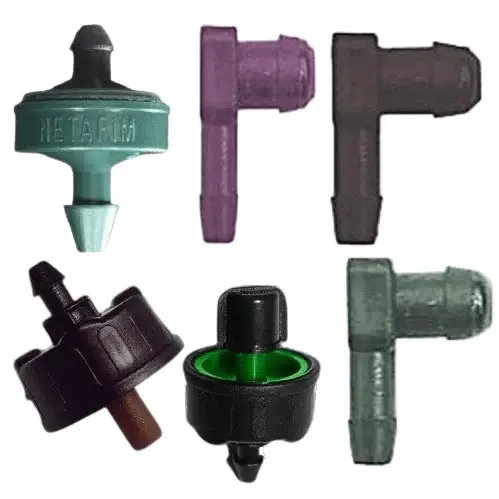
A complete guide to choosing the right dripper for drip irrigation based on plant type, soil, and water pressure; including an introduction to dripper types and installation and maintenance tips.
Read moreA complete guide to buying from the Novin Absar store; choosing irrigation products, adding them to the cart, and paying via three methods: bank transfer, cryptocurrency, and online payment gateway.
Read more