 Novin Absar
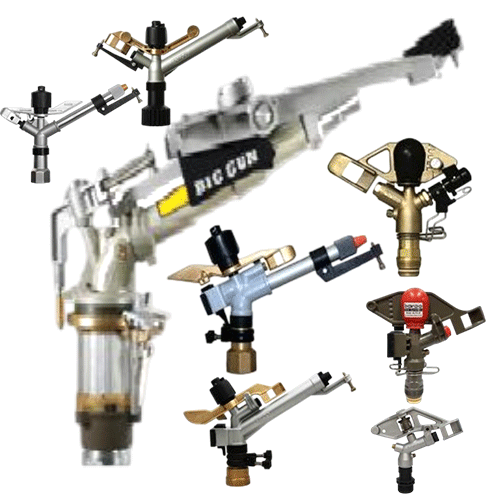
Saroo Sprinkler
Sprinkler
The Saroo sprinkler is one of the agricultural sprinklers used in sprinkler irrigation systems that receives water from water conveyance pipes and, under a specified working pressure, sprays it uniformly over the crop surface and soil. Perhaps the most important part of a sprinkler irrigation system is the sprinklers. The Saroo sprinkler is installed at specific intervals and in defined patterns and performs the irrigation operation. Since the water spraying by sprinklers takes the form of raindrops, this method is known as sprinkler irrigation, and its spray pattern is derived from the pattern of rainfall.
Sprinkler Working Pressure
Sprinklers deliver their best spraying performance only at the permitted operating pressure determined by their manufacturers. Problems such as non-uniform spraying, increased or decreased rotation speed, failure to rotate, high wear, and the like are caused by the system pressure being lower than the sprinkler's permitted pressure.
Sprinkler Flow Rate or Operating Rate
The volume of water that enters the ground within a specified time period is termed the sprinkler flow rate. The operating rate is generally measured in millimeters per hour or cubic meters per hour. This rate depends on the sprinkler dimensions, nozzle size, system working pressure, and the number of sprinklers. When purchasing, be sure to note that the sprinkler's precipitation rate must be lower than the soil's infiltration rate; otherwise, there is a possibility of runoff forming on the surface of the agricultural land.
Sprinkler Wetted Pattern
Typically, the Saroo sprinkler wets the ground in a circular pattern (top view). To achieve the highest level of uniformity and overlap, sprinklers are installed in specific patterns on the agricultural land. For this purpose, a 65 percent standard for the spacing between sprinklers is determined and recommended. The uniformity of sprinkler spraying is affected by many factors, but system working pressure and wind speed are perhaps the most important factors that can disrupt this uniformity. In some cases, even a light wind can disturb the sprinkler's spray pattern. In such situations, the sprinkler spacing is calculated closer to neutralize the effects of wind.
Size of Droplets Exiting the Sprinkler
Particles ranging from 0/5 to 4 millimeters exit the sprinkler nozzle during operation. Finer droplets are located near the sprinkler and coarser droplets around the spray radius. Larger droplets can cause damage to some crops and soil; therefore, if your crop is vulnerable to large droplets, we recommend using the Saroo sprinkler in a small size. The nozzle size and system working pressure have a great influence on the size of the droplets exiting the sprinkler. When the system working pressure is low, larger droplets exit the sprinkler due to the loss of the water jet state in the sprinklers. Therefore, be sure to match the sprinkler's working pressure with your system's working pressure before purchasing the sprinkler.