 Novin Absar
16 mm Rodent-Resistant Polyethylene Pipe
16 mm Rodent-Resistant Polyethylene Pipe
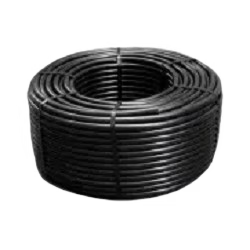
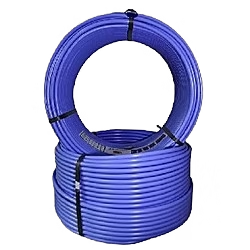
The 16 mm polyethylene pipe (3/8 inch) is one of the smallest pipe sizes available. It is supplied in coils of 50, 100, 200, and 400 meters, with a wall thickness of 1/4 mm. It is rodent-resistant and manufactured in blue.
The 16 mm pipe is available in two types: plain and drip-emitter-integrated,
with coil weights of 19, 21, and 25 kg.
For polyethylene pipes with integrated drip emitters, the emitter spacing can be selected
according to the customer's requirements, with common options of 20, 30, and 50 cm. This eliminates the need to install separate emitters.
For the plain type, various emitters can be used, including button emitters, pencil emitters, pot emitters, Netafim emitters, and other compatible models.
Applications of 16 mm Pipe
The 16 mm polyethylene drip irrigation pipe is used to irrigate agricultural crops, seedlings, trees, and other plants. It can also be used to deliver fertilizers and agricultural chemicals to plants. Its use can help improve irrigation efficiency, increase crop production, reduce soil erosion, and lower operating costs.
Drip irrigation fittings are made from plastic (polymeric) materials and are manufactured in various colors. They are used in drip and sprinkler irrigation systems, depending on the fitting type and application.
The operating pressure of the 16 mm pipe with a wall thickness of 1/4 mm is 4 bar, and its weight per meter is 0.64 grams. The pipe with a wall thickness of 1/2 mm has an operating pressure of 6 bar and a weight per meter of 0.73 grams.
Before purchasing 16 mm pipe, calculate the area of your agricultural field or garden and determine the number of crop rows you plan to irrigate. For orchards and greenhouses, it is also advisable to determine the number of trees and plants in advance. This will help you estimate the required pipe length and the number of fittings, avoiding problems during installation.
Another application of this product is grout injection into the foundations of concrete structures. For this purpose, 16 mm polyethylene pipes without standard certification are sometimes used. These pipes are generally softer and less expensive. Their flexibility allows them to recover their original shape more easily after bending, making them suitable for certain grout injection applications.
Related products