 Novin Absar
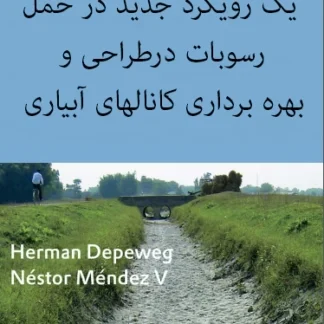
Sediment Transport in Irrigation Canals
$0.77
Sediment Transport in Irrigation Canals
Sediment transport in irrigation canals has a considerable impact
on the stability of the irrigation and drainage system; erosion or unwanted or unintended sediment deposition in canals not only increases maintenance costs but also leads to unfair and inadequate distribution of irrigation water.
A correct understanding of the behavior and transport of sediment in these canals helps in planning efficient and reliable water delivery schedules to supply water at the required levels. Controlled settling of sediments, estimation and scheduling of required maintenance activities, and determination of the type of desilting facilities and their efficiency, etc.
The study of sediment transport in irrigation canals focuses mainly on deposition and erosion processes in canal networks.
With regard to maintenance activities, structures should be designed in such a way that they prevent or limit the entry of sediment into the canals.
Canal system design
In addition, the design of the canal system should be based on the transport of all source materials to the farms or to specific locations in the canal system.
Irrigation canals are usually designed on the assumption that the water flow is uniform and steady and that the canals can carry water and sediment to the farms. This design assumes that an equilibrium condition exists
in which the sediment and water entering the irrigation network are conveyed to the farms without deposition or erosion. However, a perfectly uniform and steady flow is rarely found.
In the operation of irrigation systems, the flow is mainly non-uniform, with variable discharges and a constant water level at the regulation points where water reaches the intakes.
The sediment transport capacity of canals depends largely on flow conditions and is variable. Although the water flow can be modeled with a high degree of
After payment the download button is enabled here and in your orders.