 Novin Absar
Hydrological Models
$0.26
Hydrological Models
Hydrological models are the foundation of sustainable economic development, the functioning of healthy ecosystems, reliable agricultural productivity, dependable power generation, maintaining desirable environmental quality, sustained industrial growth, benefiting from a high-quality lifestyle, and the renewal of land, air, and water resources.
With population growth, the demand for water for agriculture and industry has soared.
On the other hand, per capita freshwater resources are declining. Therefore, effective water resource management strategies are needed.
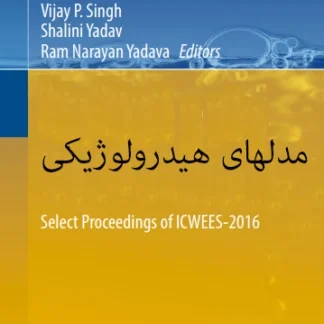
These strategies must also consider the nexus between water, energy, environment, food, and society. With these considerations in mind, the International Conference on Water, Environment, Energy and Society (WEES-2016) was held at AISECT University, Bhopal, Madhya Pradesh, India, from 15 to 18 March 2016.
This was the fifth edition of the conference and it had several objectives.
The first objective was to provide a forum not only for engineers, scientists, and researchers, but also for practitioners, planners, managers, administrators, and policymakers from around the world to discuss issues related to water, environment, and energy that are vital to livelihoods and community development.
Government Plans in the Hydrological Field
Second, the Government of India has launched two major projects, one for cleaning the Ganges River and the other for cleaning the Yamuna River.
In addition, the country allocates substantial funding to irrigation projects to provide good-quality and sufficient water for all farmers.
These are large ambitious projects and require attention to all aspects of water, environment, and energy as well as society.
Including economics, culture, religion, politics, management, and law.
Third, when water resource projects are developed, it is important to ensure that these projects achieve their intended objectives without causing adverse environmental consequences such as waterlogging, salinization, loss of wetlands, reservoir sedimentation, and biodiversity loss.
Fourth, the combination of increasing water demand and growing concern for environmental quality forces the planning, design, implementation, and management of water resource projects to adapt to changing conditions, especially climate change and social and economic changes.
After payment the download button is enabled here and in your orders.